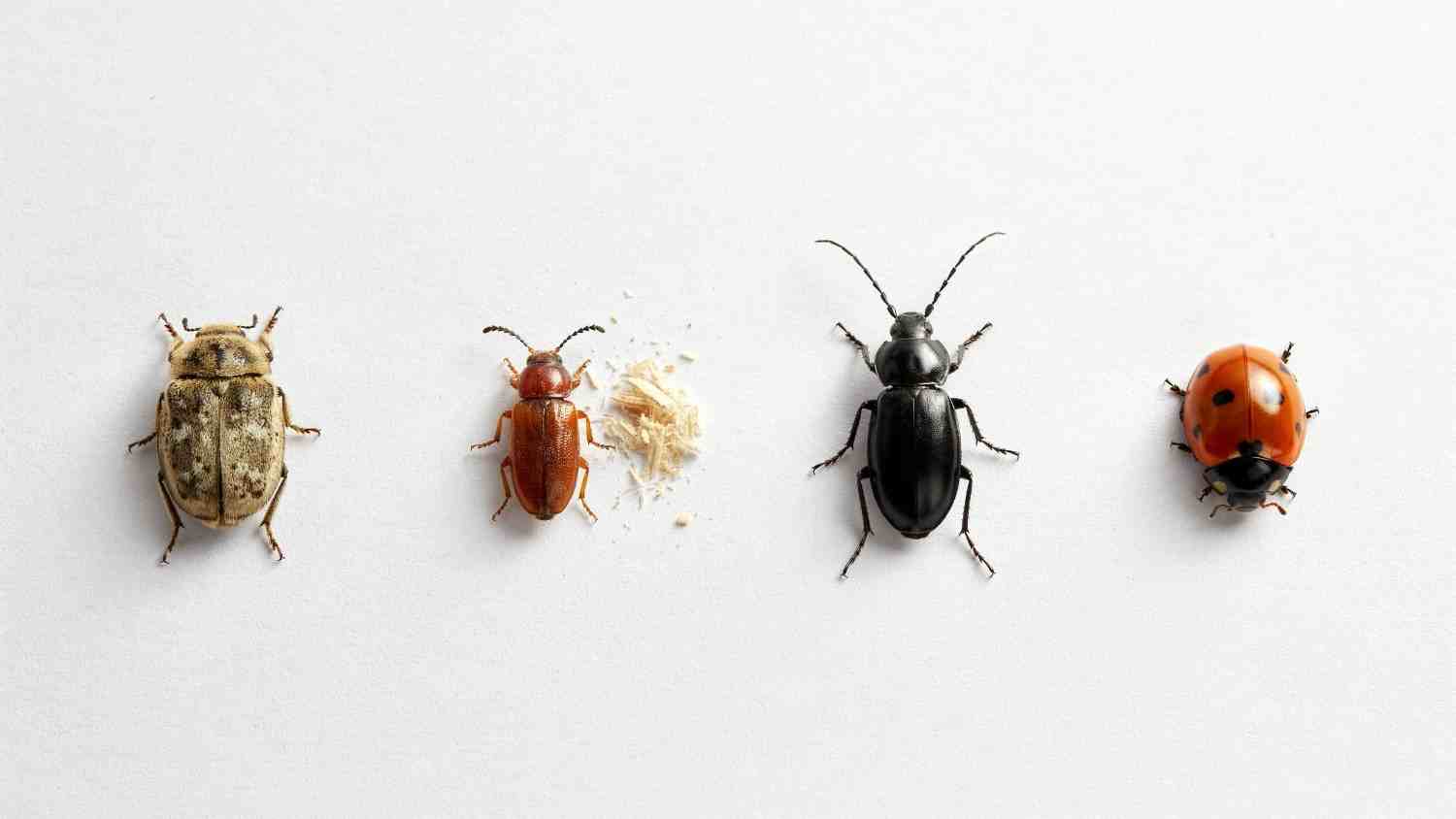
bug” photos I’ve received, as there are beetles, and six of them are the carpet beetle, powderpost beetle, pantry weevil, drugstore beetle, ground beetle, and Asian lady beetle. None of them bite. Only one of them, the powderpost beetle, can cost you real money.
Table of Contents
The rest are cleanup issues and not emergencies, even if it sounds like one at 9 pm with a flashlight in the phone’s hands.
My Name is Maya Coleman, and I ran a nature center outside Portland for nine years. The beetle question always came at the end of the first killing frost (lady beetles looking for a way in), or at the end of the first wool coat opening in months (carpet beetle larvae, mid-meal).
This occurs annually. So, what it really is, as I would tell a parent whose hand held a jar with a bug crawling at the bottom.
Quick Identification Table
| Beetle | Size | Color/Shape | Where You’ll Find It | Should You Worry? |
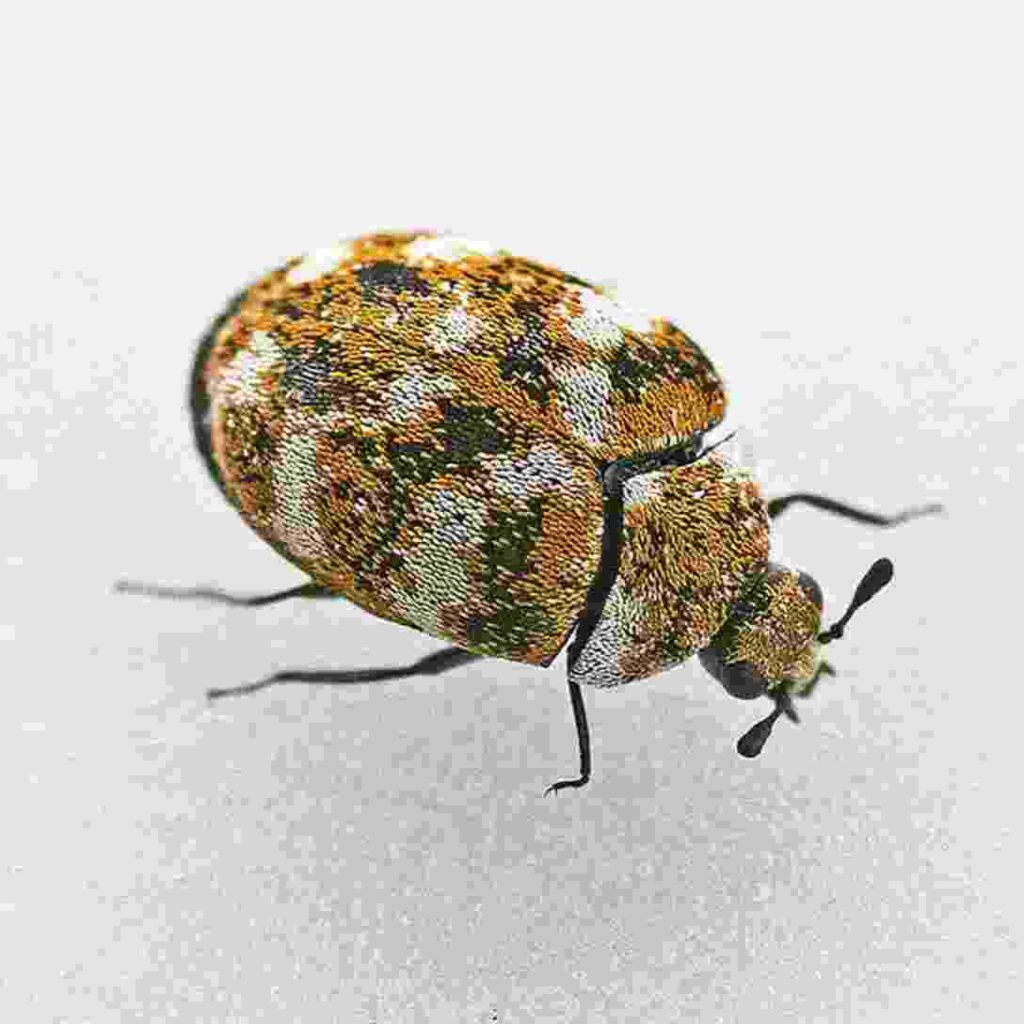
| Carpet beetle | 1/16–1/8 inch | Mottled black, white, orange; oval, dome-shaped | Windowsills, closets, under furniture, near wool or pet hair | Mild damage to fabric, not health |
| Powderpost beetle | 1/8–1/4 inch | Reddish-brown to black, narrow, flattened | Near wood furniture, flooring, exposed beams | Yes structural risk over time |
| Pantry weevil (rice/grain weevil) | 1/8 inch | Dark brown/black, long snout | Inside flour, rice, cereal, pet food bags | Mild food contamination, not danger |
| Drugstore/cigarette beetle | 1/10 inch | Reddish-brown, rounded, fuzzy | Pantry, spice jars, dried food, old books | Mild same as above |
| Ground beetle | 1/2–1 inch | Shiny black or dark metallic, long legs | Basements, garages, near doors and drains | No accidental visitor |
| Asian lady beetle | 1/4 inch | Orange to red, black spots, small white “M” behind head | Windows, walls, attics, especially fall | No nuisance only, can stain/smell if crushed |
Helpful suggestions: Take one very clear photo directly down at the bug from 6 inches up, not at an angle, not blurry from a shaky hand, and submit it to your county Extension office. Most have somebody who responds to identification emails; it is complimentary.
Carpet Beetles
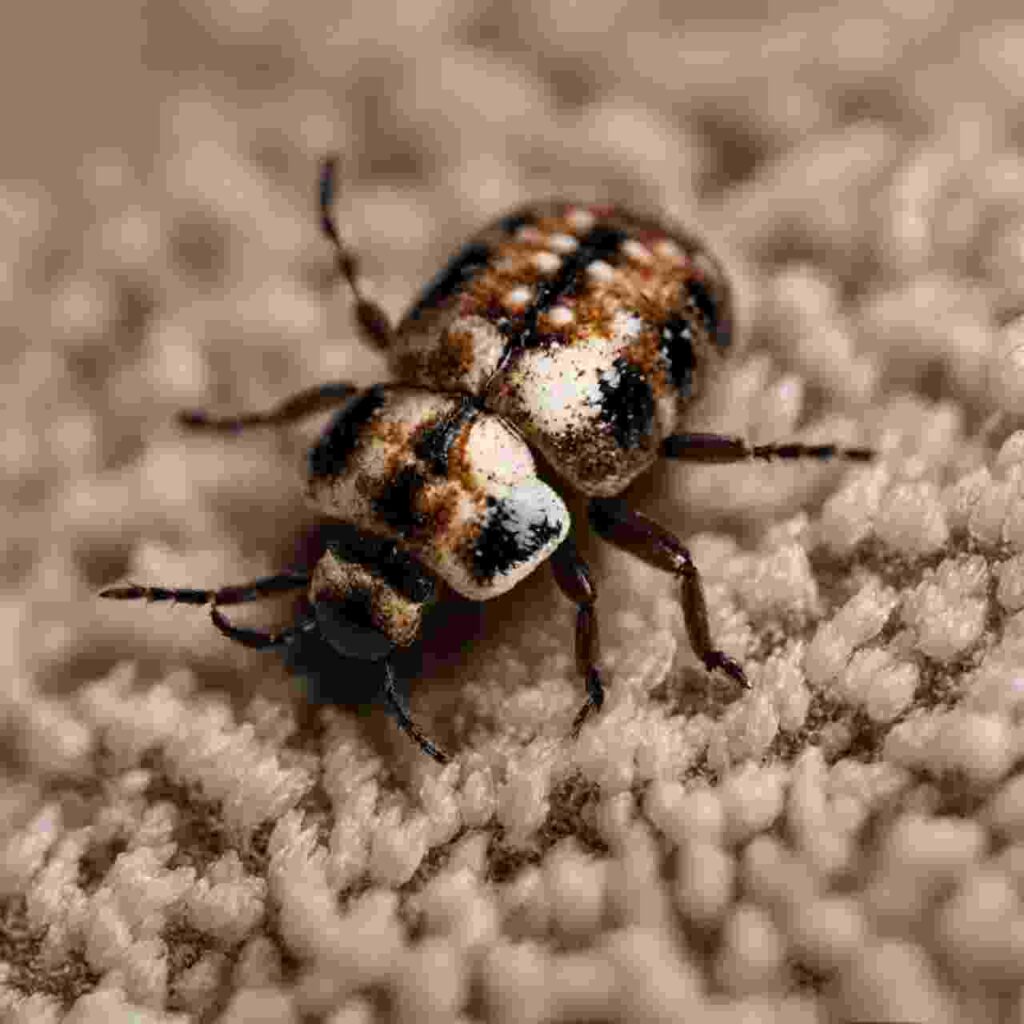
Carpet beetle larvae feast on keratin, or wool, silk, feathers, fur, the felt pads under furniture legs, and the pile of pet hair that collects where the carpet border meets the wall. They’ve come out of a box of my gran’s wool blankets which haven’t been opened for two winters, and I haven’t noticed them myself; I’ve noticed the larval skins, translucent, bristly, like discarded shells. If you see those within a folded sweater, you have an active problem, not a stray visitor.
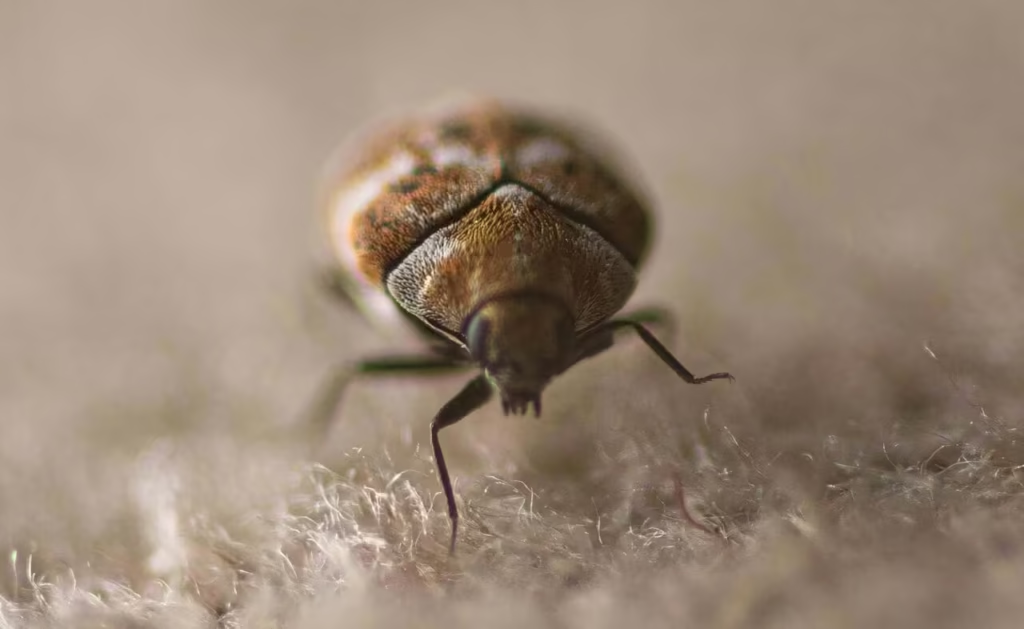
The ones that you find dead on a windowsill in the spring do not cause the problem. These are adults who have done their damage as larvae and are now attempting to make their return to the outside, but not succeeding. They actually do damage earlier in the dark inside of whatever they were eating.
The solution to this isn’t pretty: vacuum the area around the edges of a room and beneath furniture, wash or dry-clean anything you think may have come into contact with the eggs and larvae because they will be killed on the first pass with heat, and if the infestation continues to occur in one corner of a room, check a nearby wall cavity for dead mouse, bird or wasp nests. This hidden food source can sustain a population even after you’ve thought you’ve taken care of them.
Powderpost Beetles
This is the only beetle on this list that I’d advise you not to shrug off, and the thing of it is, you will rarely see the beetle itself. Look at the wood surface, and you’ll see a tiny, circular hole, and under or inside that hole, a dust- not sawdust, but rather the consistency of flour. The powder is called frass, the beetle’s signature as it chewed through the wood for a year or more as a larva before finally chewing its way out as an adult.
If there’s one old hole in a secondhand dresser, it isn’t a pressing matter. Many furniture damages from past decades are also exposed regularly, and when the frass doesn’t show up since you noticed the hole, the insects in the wood are likely dead. It is important to note whether or not frass is found subsequent to removal of the debris. Clear it up, and after two to three weeks, check. A second time, if it’s there, there’s something inside that wood that’s still alive and eating.
If the furniture is required to be isolated, treatment or replacement will be much cheaper than fumigation of a room. That’s the only time on this whole list that I’d suggest you have structural wood, a wood beam, subflooring, exposed joists in the basement, and that you have it professionally inspected before undertaking any remodeling. Avoid these pests, as they will damage your food and plants.
Two bugs that cause the same response: when you open a bag of flour or a box of cereal, something is crawling around that shouldn’t be there! The weevils have a prominent snout and a slightly downturned nose, which can give them a comical look when viewed under magnification. It is not a drugstore beetle, which has a more pointed snout, smaller body, and fuzzier body.
They’re both not poisonous if you swallow a few, just bad-tasting! What really matters is that both of these are found in the same package (in the rice, check the flour, the cereal, the pet food kibble, the bird food) and not just in one package, so you don’t assume it’s only in one bag.
I’ve seen this “recurring” pantry infestation multiple times, and it has always been traced back to one forgotten bag of cornmeal pushed to the very back of the pantry shelf, where it continued to grow for months after people threw it away.
Throw away the infested package; use airtight glass or hard plastic containers and wipe off the shelf with soapy water to remove eggs; continue with the other packages of food. That one change is the answer to the repeated version of this problem to a greater extent than any other, since it eliminates the beetles’ ability to move from container to container from the outset.
Ground Beetles
The largest of this list, and the one that makes people more anxious when they see it in a basement, due to its size, shiny black or dark metallic, with long legs, and is fast enough to startle them when it suddenly rushes across a basement floor.
It’s also one of the ones that have the least to worry about. Ground beetles live outside under rocks, mulch, and leaf litter, and are found indoors more often than not, when they are attracted into homes in search of the smaller insects that are their prey.
One in a basement or garage is no big deal. Outdoors: One of the more beneficial insects in your garden because they prey on slug eggs and caterpillar larvae that would otherwise be eating your plants. I have never suggested doing a yard with chemicals to eliminate them, and I don’t want to begin now.
Use a cup and a piece of paper to remove it; then what did you discover it in: a worn door sweep, a crack in the foundation, a loose seal around a utility pipe. A large number every week is the place to start, not the indicator of an indoor population,
Asian Lady Beetles
Looks close enough to a native ladybug that most people call it one, but it’s larger, more oval than round, and orange rather than true red, with a small white marking shaped like an M or W just behind the head.
They show up in clusters on sun-warmed exterior walls in fall, then reappear indoors in ones and twos on any unseasonably warm day through winter, not because they’re breeding inside, but because they came in to wait out the cold and a warm afternoon wakes them up.
They can give a small pinching bite if you handle one, more startling than painful, and if you crush one, it releases a yellowish fluid with a sharp, unpleasant smell that can stain light fabric or paint. Both of those are avoidable with the same fix: vacuum instead of squash, using a bag you can seal and take outside afterward.
The better long-term move is sealing gaps around windows, siding, and roofline before the first cold snap in fall, since that’s the entry window that matters, not anything you do once they’re already inside for the winter.
When to Actually Call an Exterminator
Most of what’s on this list resolves with cleaning, sealing, and better food storage. Call a pest control company that specifically handles wood-destroying insects if:
- Frass keeps reappearing near wood furniture or structural beams even after you’ve cleaned it away, that’s an active powderpost beetle population, not old damage.
- You see multiple new exit holes appear in the same season, rather than one old hole you’ve had for years.
- Carpet beetle larvae keep turning up in the same room no matter how much you vacuum, which often points to a hidden protein source, like a dead animal, in a nearby wall or attic void.
- You’re finding large numbers of any beetle indoors weekly rather than occasionally, which usually means there’s an entry point or nesting site a visual inspection alone won’t catch.
For pantry pests, ground beetles, and Asian lady beetles, an exterminator is rarely the right call. Cleaning, sealing, and airtight storage solve nearly all of those on their own.
Related FAQs
What is that small black bug that seems to be a small beetle in my house?
Probably a carpet beetle if found on a windowsill or near cloth, or a ground beetle if the bug is larger, shiny, and they are moving quickly, near a door or drain. The size and location narrow it down quicker than the colour.
Do house beetles harm people?
The common ones are harmless to people, don’t bite, sting, or have disease-carrying organisms. Powderpost beetles are not a health concern either, but can cause significant damage to wood over time if left untreated.
How do I get rid of beetles in my house naturally?
Most infestations are eliminated by simply vacuuming, washing, or heat treating infested fabric, changing dry foods to airtight containers, and sealing exterior gaps, rather than treating with chemicals.
What is my bedroom attracting beetles to?
Typically, carpet beetles are attracted to wool, silk, or pet hair in bedding or closets, or Asian lady beetles are seeking a warm place in the fall or winter. First look in the closets and window sills.
Which beetle makes holes in wood furniture?
Powderpost beetles. The beetle is rarely seen, but the tell, a small, round exit hole with fine flour-like frass underneath, is quite common.
So, are ladybugs and Asian lady beetles the same?
No, native ladybugs are smaller, brighter red, and solitary. Asian lady beetles are bigger, more orange, swarm together, and are the beetles that swarm windows and siding in the fall.

Maya Coleman is the founder and site owner of Nature Archive. She spent nearly nine years running field education programs at a nature center outside Portland, where she learned how to turn everyday questions about the natural world into clear, practical answers. She studied Environmental Science at Portland State University, with a minor in science communication, and launched Nature Archive in 2022 to help make reliable nature information easier for everyone to understand.